


Wells noticed the green shoots.
It was bath time and, as we walked into the bathroom, his little face lit up. He looked at me with wide eyes, pointing at the three little sets of pots he and Rachel planted weeks ago. Each pot holding at least one seedling pushing up a pale stem through the dark soil. “Look, Daddy. Look. They grew.”
Three weeks, maybe four. He planted seeds, he waited (impatiently), and the soil did what soil does.
Three weeks of writing about seeds and layers. But a seed sprouts in weeks. Fujimura finishes a painting in months. You can gut your way through a month of invisible work.
What about eight years?
In physics, impact is force divided by time. A large effect in a small window. We measure everything this way now. The viral post, the hockey-stick graph. How do you scale?
Jesus never talked like this. He talked about mustard seeds and yeast in dough, seeds falling into the ground and dying. His metaphors assumed a timescale that would make any investor walk out of the room.
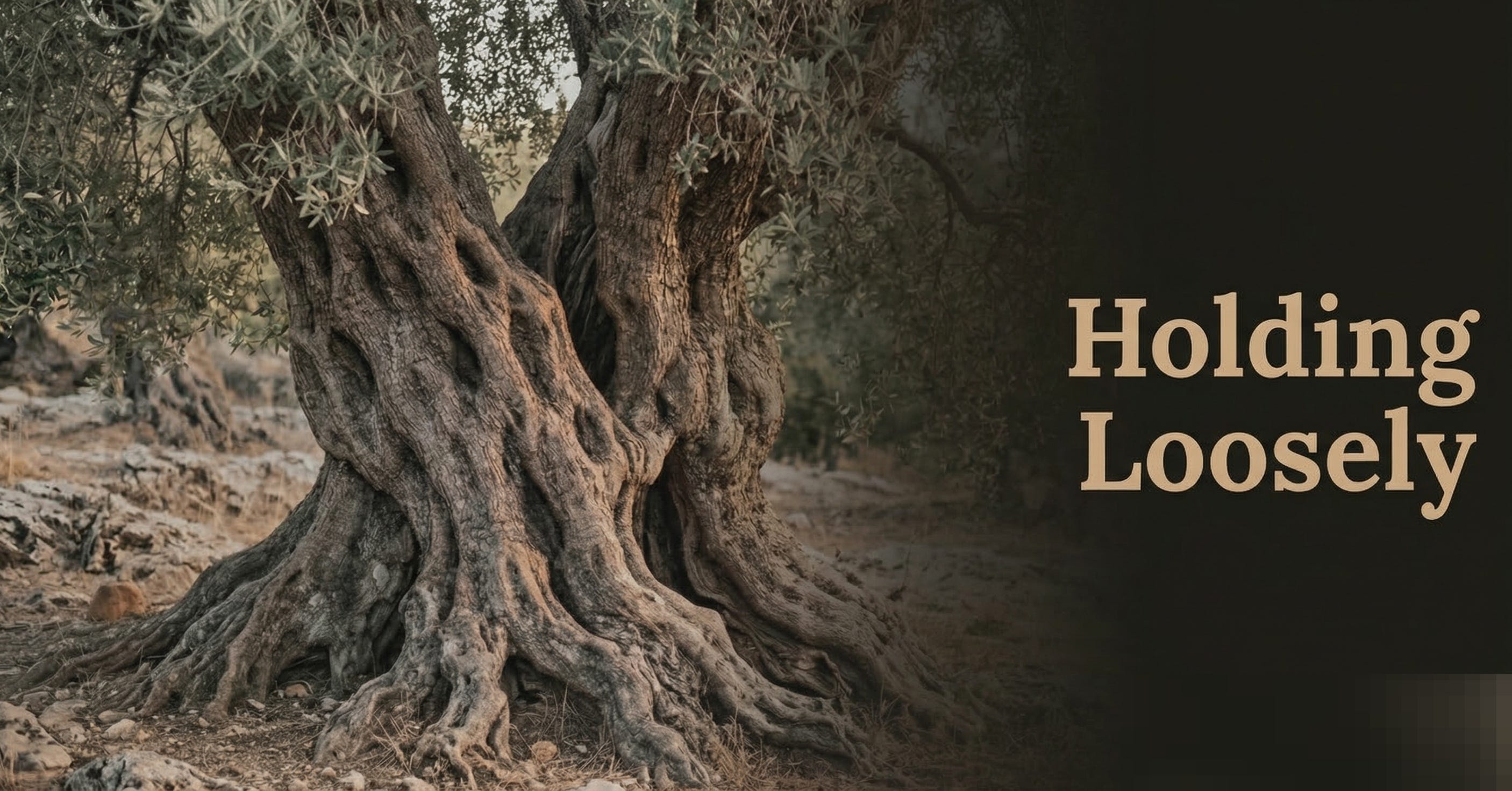
Andy Crouch has spent years writing about technology and what we lose when we optimize everything. In one fascinating conversation, he lingers on a particular image: the olive tree.
You plant an olive tree, and you wait. Eight years before it bears its first fruit. Eight years of watering and pruning and protecting a thing that gives you nothing back.
That’s the opposite of impact.
But there are olive trees in the Mediterranean that were planted two thousand years ago. Still bearing fruit. Still rewarding people who will never know the name of whoever knelt in the dirt and planted them.
That’s also the opposite of impact.
The olive tree doesn’t scan the horizon for better soil. It sinks into the ground it’s been given and stays, becoming more itself with every passing decade, trunk thickening, roots reaching deeper into the same earth.
I am like a green olive tree in the house of God. I trust in the steadfast love of God forever and ever.
— Psalm 52:8
Crouch asks two questions.
Am I doing anything I don’t expect to bear fruit for eight years?
Am I doing anything that might still be bearing fruit in two thousand years?
My instincts run the other direction. I want results I can measure, growth I can see within a quarter. Plant Monday, harvest Friday.
I’ve been contemplating the seeds of this book for years. Some days it has felt like watering dirt. Other days like arguing with a tree that refuses to grow on my schedule. I don’t know when it’ll bear fruit, or whether anyone will taste it.
But I keep showing up with the water. You can’t rush an olive tree. You can only decide whether you’ll still be kneeling there when the eighth year comes.
This week’s practice:
Answer Crouch’s two questions. On paper, not in your head.
Am I doing anything I don’t expect to bear fruit for eight years?
Am I doing anything that might still be bearing fruit in two thousand years?
If both answers are no, don’t just sit with that. Name one thing you’ve been avoiding because the timeline scares you. A community you commit to past the point of convenience. A calling you keep pouring into before anyone notices or pays you for it. Write it down. Put a date on it.
More next week,
Rex